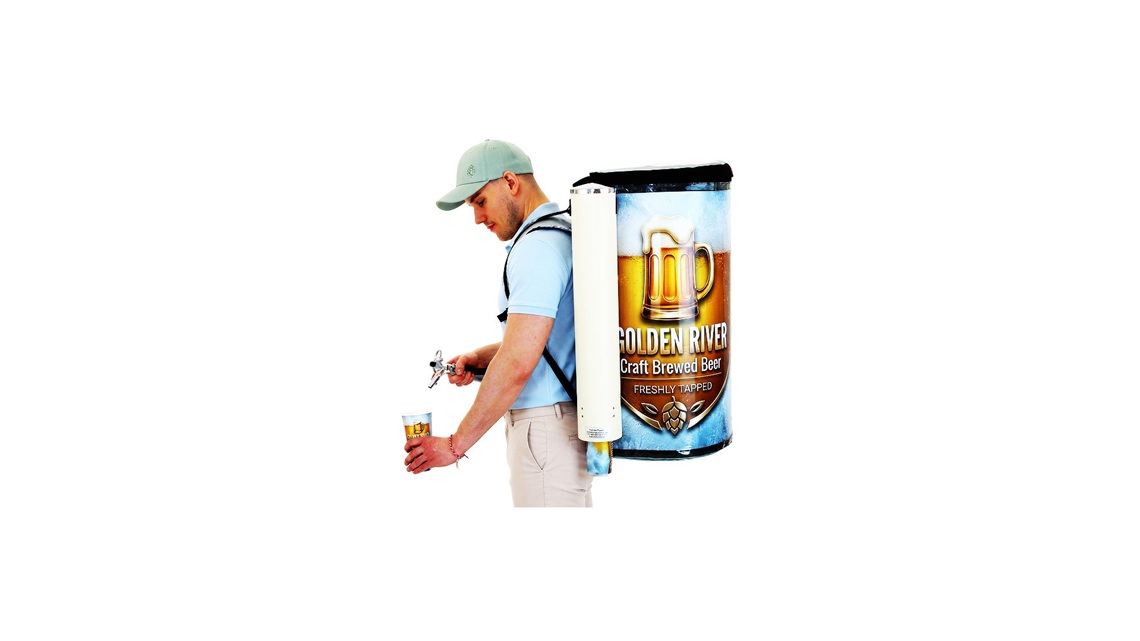
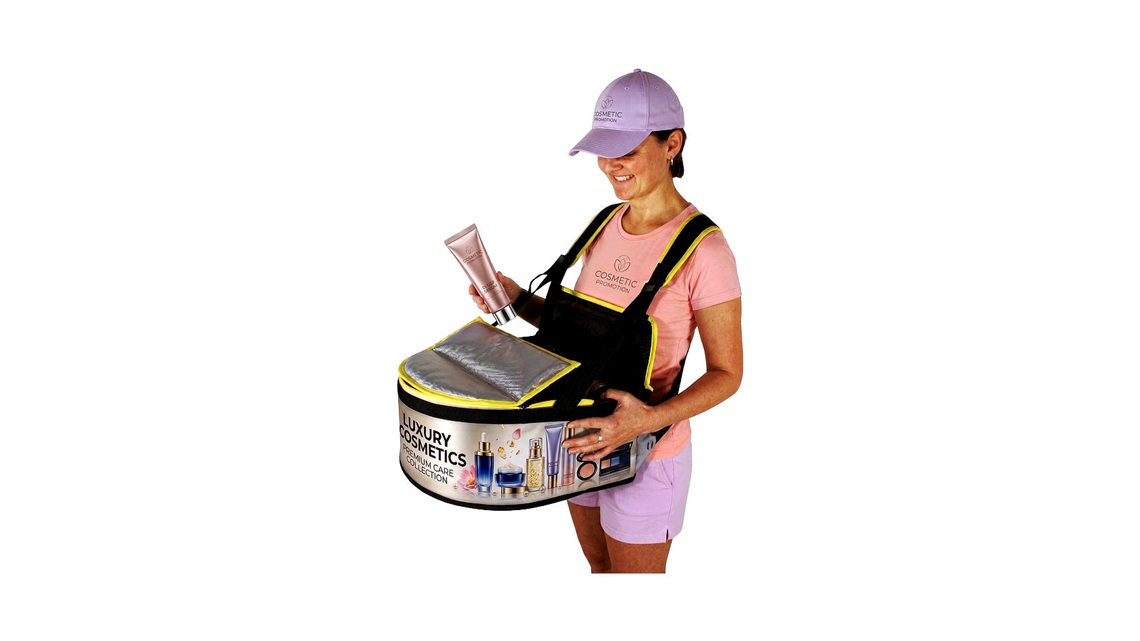
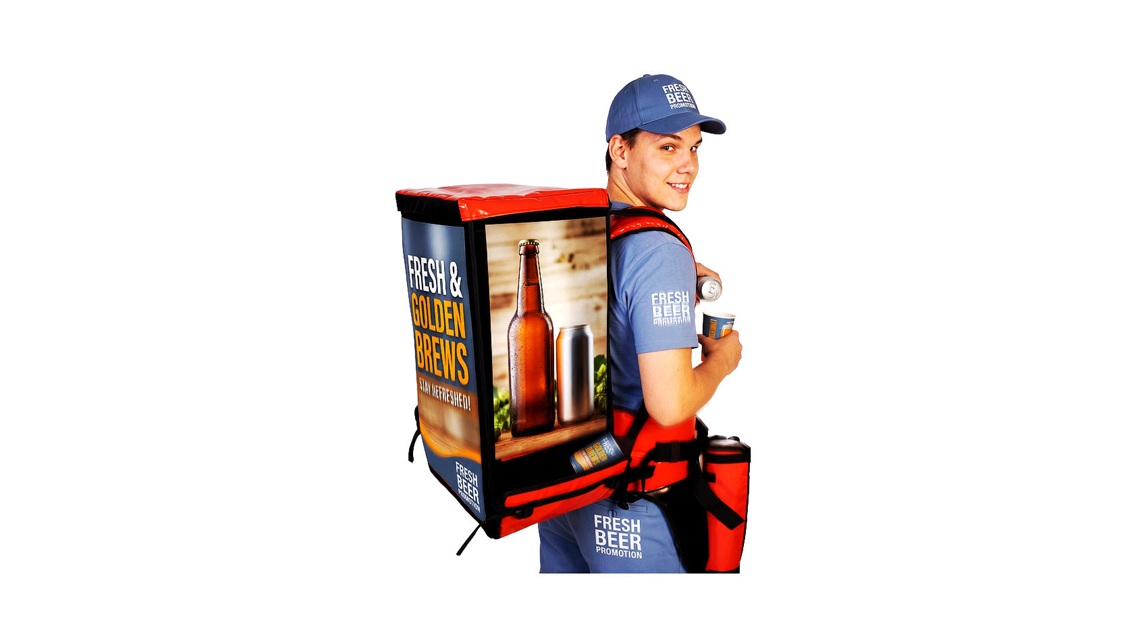
- Behind the Scenes:
- Gain an insider's perspective with behind vending tray the-scenes footage, revealing the logistics and coordination that go into delivering an unforgettable stadium beer experience. Watch how professional vending tray systems support rapid on-the-go food and drink sales at major events. Ideal for festivals, sports arenas, street promotions and live brand activations — robust, comfortable to carry and optimized for continuous professional use.
Stadium Operations FAQ for Mobile Vending Tray Teams
Why is a two-person vending team useful in a sports venue?
A pair can divide selling, stock control and route awareness without placing every task on one operator. One person may serve the immediate customer while the second watches movement, identifies the next request or coordinates replenishment.
The Dublin footage presents vendors as a working pair. Buyers should treat that as an operating example rather than proof that every venue requires exactly two people per zone.
How should responsibilities be divided before the team enters the crowd?
Each employee should know who handles product selection, payment confirmation, customer communication and remaining-stock checks. These roles can change during the shift, but they should not change in the middle of a transaction.
A short pre-service briefing prevents both vendors from reaching for the same item or assuming that the other person completed the payment step.
How can a venue allocate selling zones without creating overlap?
The stadium should be divided into clearly named sections with defined entry and exit points. Each mobile team receives one primary route and a nearby replenishment location.
Overlap can be useful during demand peaks, but uncontrolled crossing wastes stock and can leave another section without service. Team leaders should record where each pair starts and where it returns.
What route information should staff receive before gates open?
Operators need more than a seat-block number. They should know stair direction, restricted corridors, emergency exits, standing areas, steep sections and locations where selling is not permitted.
A walking rehearsal with an empty tray helps identify turning problems. A second test with the planned load confirms whether the route remains practical.
How should stock be split between two vendors working together?
The pair may carry the same fast-moving assortment or complementary products, depending on customer demand and the available space. Duplicate stock simplifies substitutions, while complementary stock offers more choice.
The decision should be based on transaction data from a pilot. Two visually full trays are not efficient if one product repeatedly remains unsold.
What is the purpose of a pre-counted starting load?
A documented starting quantity makes it possible to calculate items sold, returned, damaged or transferred. It also allows the venue to compare one route with another.
Every tray should be loaded against a simple count sheet or scanning process. Memory is unreliable after a busy match period.
How should products be transferred between team members during service?
A transfer should happen at a stop point rather than while both employees are moving through a staircase or row. The receiving person confirms the product and quantity before it is added to the tray.
Unrecorded transfers create stock discrepancies. They can also produce uneven loading if several heavy items are moved to one side.
How can cashless payment be integrated into the team workflow?
The payment device should have a fixed secure position and remain visible to the responsible operator. The team should agree whether the product is handed over before or after payment confirmation.
Battery level, network availability and a fallback procedure must be checked before the shift. The tray itself does not guarantee payment connectivity inside a stadium.
What should happen when the payment terminal loses its connection?
The operator follows the venue’s approved offline or no-sale procedure. Staff should not invent personal workarounds or use unapproved devices.
The incident is reported with location and time because network problems may affect several teams in the same section. Products and incomplete transactions must remain traceable.
How should a team prepare for half-time or another demand peak?
Fast-selling products should be positioned for immediate access before the peak begins. The replenishment crew should prepare replacement stock in the same layout used on the tray.
During the peak, the route may be shortened to the most active blocks. Trying to cover the complete stadium can reduce the number of completed transactions.
When should a mobile team return for replenishment?
The return point should be triggered by a defined remaining quantity, a scheduled time or the end of a route segment. Waiting until the tray is completely empty can leave customers unserved during the walk back.
The threshold may differ by product. A low stock of the main beverage can justify an earlier return even when slower items remain.
How can supervisors monitor several vending teams during a match?
Each team should have a unique identifier and a communication method approved by the venue. Supervisors track current zone, last replenishment and any reported problem.
Communication must remain brief because operators need their hands and attention for safe movement. Long conversations should take place at a service point, not on crowded stairs.
What should staff do when a route becomes blocked?
The team stops outside the obstruction and uses the agreed alternative path. Staff should never push through emergency activity, security interventions or dense queues to maintain a sales schedule.
The blocked location should be reported so other teams can be redirected. Safety and venue instructions take priority over completing the planned route.
How should alcohol or age-restricted products be handled?
The venue must define identification checks, permitted sales periods, product limits and refusal procedures under the applicable rules. Every operator should receive the same written instruction.
A mobile tray does not change the seller’s legal responsibilities. Staff must be able to stop a transaction without pressure from surrounding customers.
What role does staff rotation play in a longer event?
Rotation allows carrying, replenishment and rest tasks to be shared across the shift. It also gives supervisors an opportunity to inspect equipment and rebalance stock.
Rotation intervals should reflect load, stairs, temperature and crowd density. A fixed timetable may need to be shortened when conditions become more demanding.
How should the equipment be parked during a break?
The tray should be placed on a stable protected surface in the designated service area. Straps must not create a trip hazard, and products should remain under the required temperature or security controls.
Parking the loaded tray in a public passage is inappropriate even for a short pause. The equipment can be knocked over or accessed without supervision.
Which incidents should be recorded after a selling round?
Operational notes should capture events that affect safety, stock accuracy or customer service.
- Loose or damaged strap components
- Products that shifted, leaked or fell
- Blocked routes and crowd-control restrictions
- Payment-device or network interruptions
- Customer complaints or refused transactions
- Stock transfers between teams
- Unexpectedly fast or slow product demand
- Early return caused by weight or fatigue
These records allow the next round to be adjusted instead of repeating the same problem.
How can the Dublin video be used in a staff briefing?
The footage can introduce the idea of coordinated mobile service and show how two vendors move and interact in a live sports setting. A trainer can pause at selected moments to discuss spacing, posture and customer approach.
The briefing must then move to the actual venue rules and equipment configuration. A video from one stadium cannot define procedures for another location.
What should be measured during a live stadium pilot?
The pilot should collect operational data rather than relying on general impressions.
- Starting and returned quantity by product
- Number and duration of completed route rounds
- Transactions during normal and peak periods
- Average time between replenishments
- Payment failures and cancelled sales
- Staff reports on load and route difficulty
- Customer requests for products not carried
- Equipment issues requiring correction
The results help determine team size, starting load and route design for the full event.
How should footage from a pilot be reviewed responsibly?
Managers should review specific operational moments such as congestion, handover, payment and restocking. Edited highlights should not be used as the only evidence of performance.
Recording must follow the venue’s privacy and media rules. Faces, payment information and security procedures should not be published without the required permission.
Which information should accompany an enquiry for a stadium vending project?
A technically useful request should describe the venue operation as well as the tray.
- Products, package dimensions and unit weights
- Expected attendance and active selling periods
- Seat blocks, stairs and restricted routes
- Planned number of teams and staff per team
- Starting stock and replenishment concept
- Payment method and device requirements
- Branding areas and campaign duration
- Delivery destination and required readiness date
This information allows the manufacturer to assess the proposed configuration while the venue remains responsible for staffing, permits and local operating procedures.
- Stand Out from the Crowd In a sea of competitors, Rocketpacks helps your brand stand out.
- Our eye-catching designs and practical functionality make it easy for your team to move through crowds and attract attention.
- Whether it’s a trade show, a street fair, or a sports event, Rocketpacks ensures your brand is always in the spotlight.
- Eco-Friendly and Efficient, Rocketpacks are not only effective but also environmentally friendly.
- Our systems are designed to reduce waste and promote sustainability, making them a great choice for eco-conscious brands. Plus, their efficiency means you can serve more customers in less time, boosting your overall productivity.
- Built for heavy-duty use: Go to Technical Specifications & Pricing for Vending Trays