What distinguishes the XL hawker tray from the shallower BT4002 format?
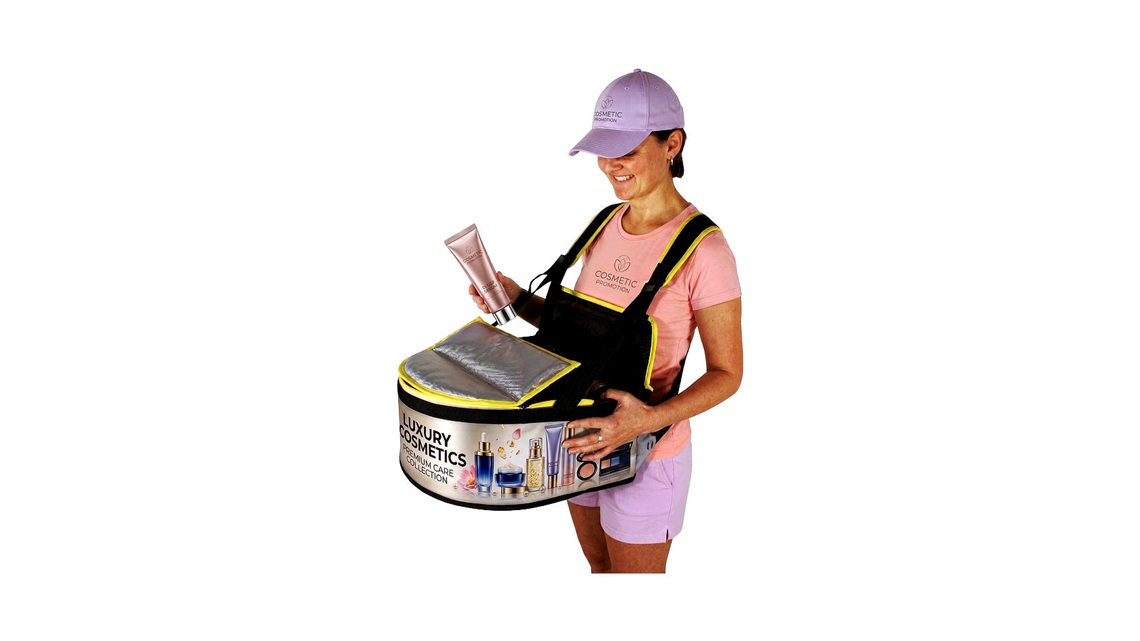
The page describes the XL version as identical in general concept to model BT4002 but with a depth of 39 centimetres. The additional front-to-back space is intended for larger packaged products and a higher-volume working layout.
This extra depth should be treated as a functional choice, not automatically as an advantage. It increases the space required in front of the wearer and can affect turning in narrow routes.
Which dimensions and empty weight are confirmed for the XL version?
The listed reference dimensions are approximately 40 centimetres wide, 39 centimetres deep and 31 centimetres high. The stated empty weight is about 2.8 kilograms.
These figures describe the tray before products, cooling media, payment equipment and other accessories are added. The complete starting load must be calculated separately.
Why is the model particularly suitable for 500 ml PET bottles and cans?
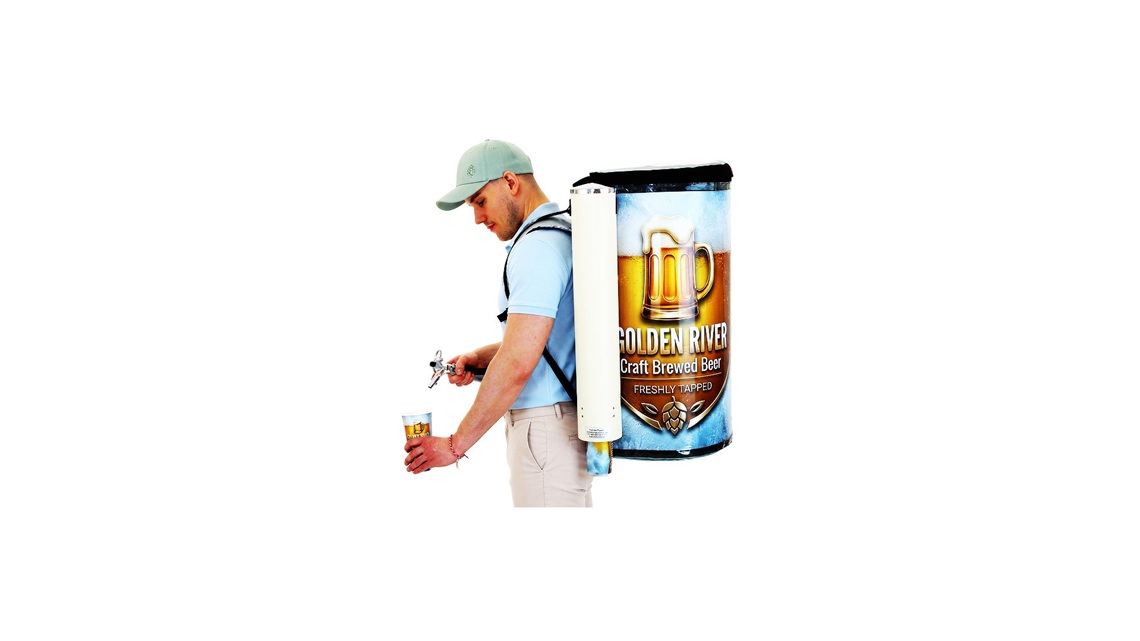
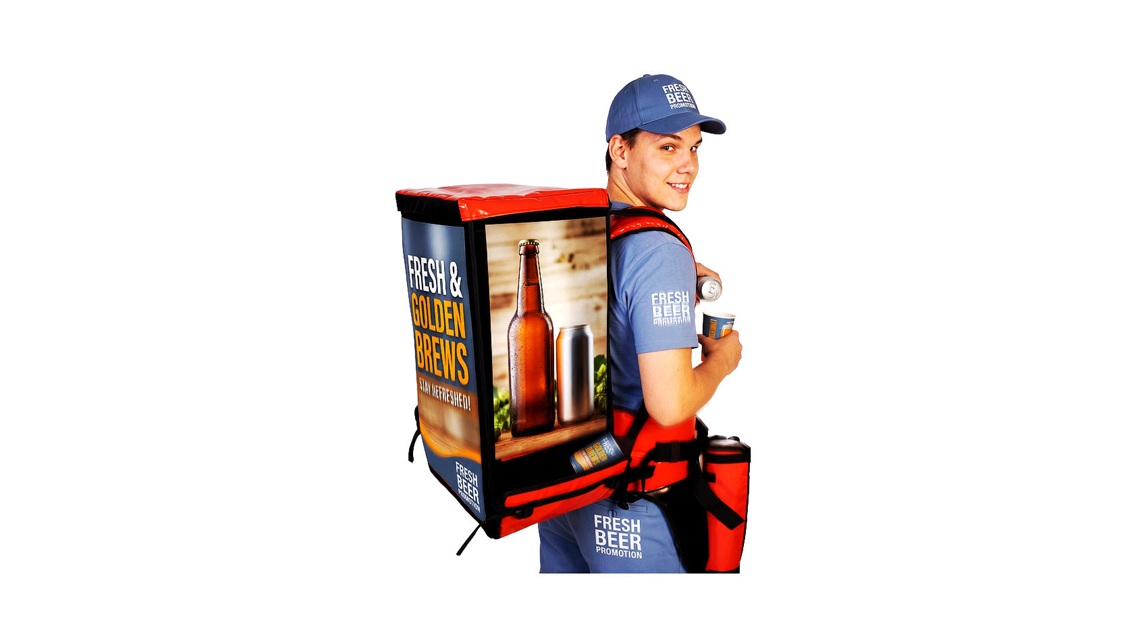
The deeper body provides room for taller and larger beverage containers commonly used in mobile event service. The page specifically names 500 millilitre PET bottles and cans as typical products.
Nominal capacity alone is not enough to confirm fit. Outside diameter, total height, cap shape and the stability of the real package must still be checked.
What is the function of the optional half-round 15-hole insert?
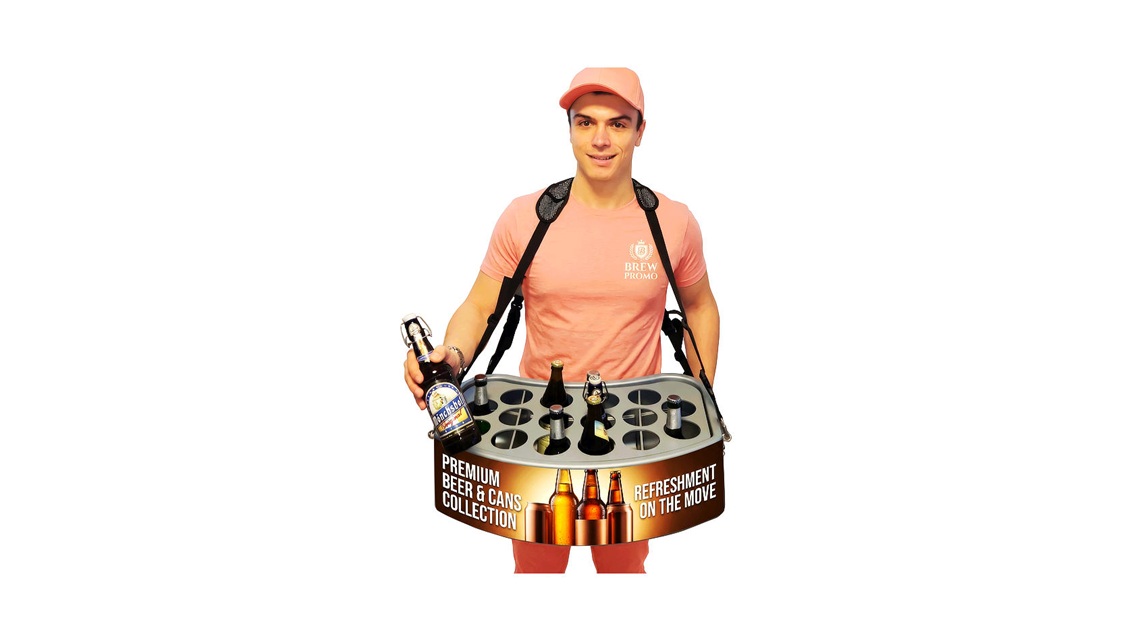
The half-round insert creates 15 individual positions for suitable bottles, cans or jars. Its openings are listed at approximately 70 millimetres in diameter and the insert height at about 50 millimetres.
Because the insert occupies only part of the tray, the remaining area can be used for another product group, reserve stock or service accessories. The final layout depends on package dimensions.
How should compatibility with the 70 mm openings be verified?
The widest point of the actual container must be measured, including labels, grip rings and raised base sections. A bottle that is 70 millimetres at the body may be wider at another point.
A physical test sample is recommended when the measurement is close to the opening size. The container should be removable without force while remaining controlled during walking.
What does the included four-section divider provide?
The flexible divider separates the interior into four working areas. It can be used for different product types, flavours, package sizes or active stock and reserve stock.
The sections should be arranged according to the order of service. Frequently requested items belong where the operator can identify and remove them without searching through the full tray.
When is the divider more useful than the bottle insert?
The divider is better for cartons, snack packs, cups, merchandise and mixed packaging that does not share one circular diameter. It also allows the assortment to change between campaigns.
The bottle insert provides more individual support for equal round containers. Buyers should choose according to package behaviour rather than the appearance of the accessory.
Can the divider and half-round insert be combined?
A combined layout may be possible because the insert is half-round, but the remaining usable space and access route must be checked with the intended goods. The accessories should not block each other or prevent the lid from closing.
A loading sketch or sample arrangement is more reliable than assuming that every accessory combination will fit the same way.
What are the two outside pockets intended to hold?
The page identifies the side pockets as storage for service accessories, cups or a money pouch. They keep smaller working items separate from the main product compartment.
Heavy, fragile or valuable items should not be placed there without checking retention and security. Pocket contents also change the side balance of the loaded tray.
How should payment equipment be positioned on the XL tray?
A payment terminal or money pouch should remain reachable without forcing the operator to twist or remove the tray. It must also stay clear of the product-removal path and lid movement.
The attachment method, device weight and protection from rain or drink spills require a separate check. Payment equipment is not automatically included with the standard tray.
What is the practical role of the removable lift-up lid?
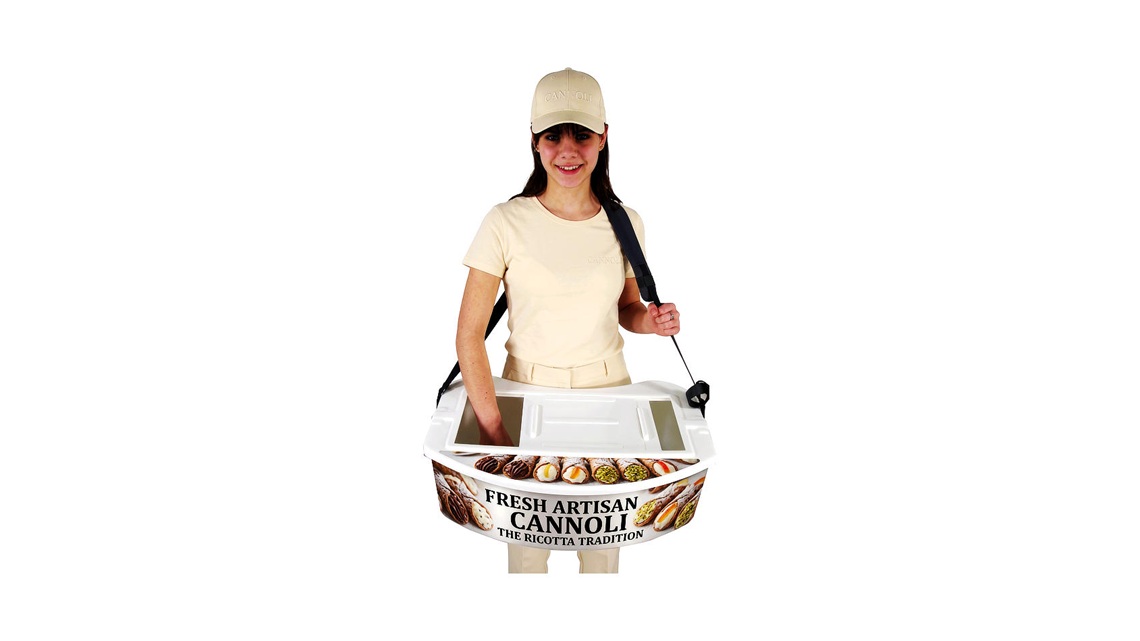
The lid protects the contents from direct contact, debris and unnecessary exposure while the operator moves through the venue. Its inner surface can also be used as an additional advertising area when open.
The lid does not create refrigeration or heating. It supports a controlled service process but cannot replace suitable product preparation and temperature management.
How much clearance is required to open the lid safely?
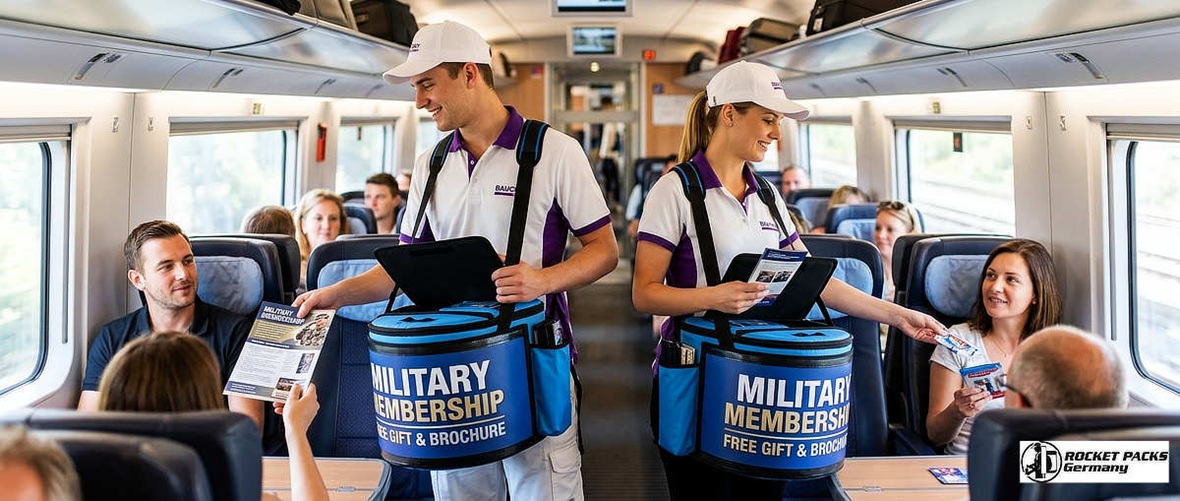
The operator needs enough space above and in front of the tray for the lid to lift without striking customers, barriers or shelving. This is especially relevant in seating rows, booths and crowded trade-fair aisles.
A route trial should include opening and closing at the actual service points. Straight-line walking clearance alone is not sufficient.
How should the front and inner-lid advertising areas be used differently?
The front panel remains visible while the operator walks and should carry the simplest brand or product message. The inner lid becomes visible during service and can present flavours, prices or a secondary campaign statement.
Artwork should be prepared for the confirmed panel dimensions of the supplied model. Important information should not sit near folds, closures or areas covered by products.
Can the XL tray be used for cold products?
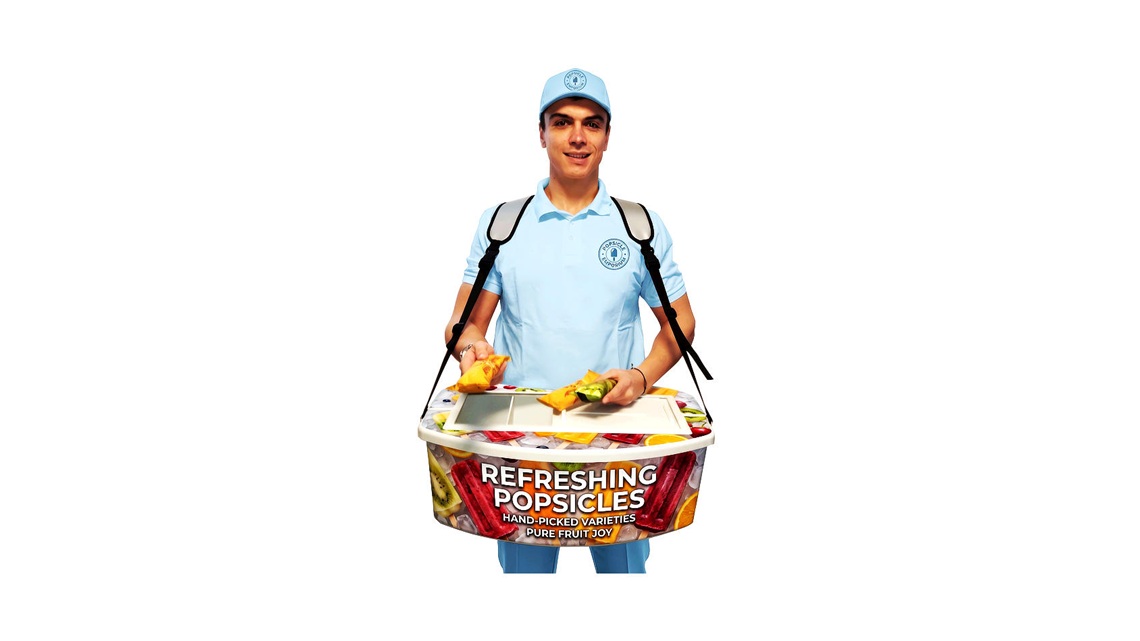
The page refers to insulated use and shows applications involving beverages and ice cream products. This means the construction can slow temperature exchange when products enter at the correct starting temperature.
No fixed cooling duration is confirmed for this page. Outdoor heat, product mass, lid opening and cooling media determine the practical service window.
Can the same tray be used for warm food or coffee service?
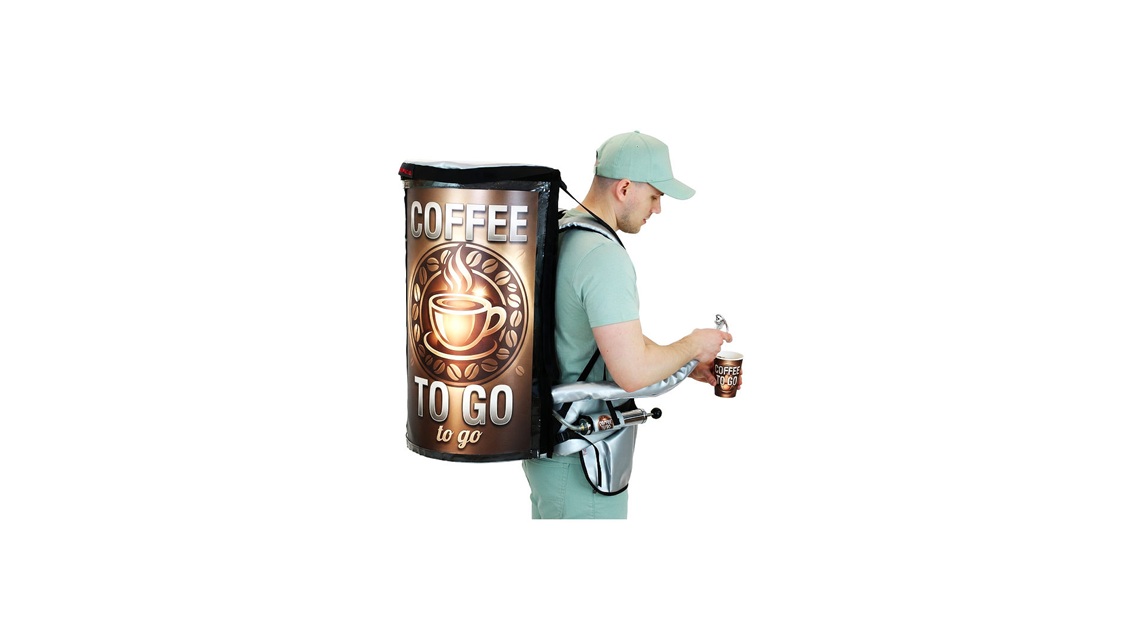
The page includes coffee and mobile food examples, so warm-product service can be considered where containers are closed, stable and suitable for carrying. The insulation can slow heat loss but does not heat the goods.
Burn prevention, leakage control and required food-holding temperatures must be tested for the exact application. Open hot liquids should not be assumed safe merely because the tray has a lid.
How should the deeper format be balanced before the operator starts walking?
Dense and heavy products should be distributed evenly and kept as close to the wearer as the internal layout allows. Placing the full beverage load at the outer edge increases leverage on the harness.
The tray should be tested at the start, at half stock and near empty. Balance can change considerably as one product section sells faster than another.
What route limitations should be checked for the 39 cm depth?
The venue should measure narrow doors, seat rows, queue lanes, turnstiles and service corridors. The operator must be able to turn without the tray contacting people or fixed structures.
Stairs and sloped ground also require attention because the front edge may restrict visibility of the next step. A loaded route rehearsal is essential for high-density locations.
How should staff fit the cross-back shoulder system?
The adjustable shoulder pad and crosswise back arrangement should place the tray level and close to the body. Straps are tightened symmetrically before products are loaded to full working weight.
Each employee needs an individual setting. A configuration copied from another wearer can create a poor operating height or unequal pressure.
What cleaning routine is appropriate for the tarpaulin-style model?
Products, inserts and dividers should be removed before cleaning. Smooth surfaces, seams, pockets, lid edges and attachment points need separate inspection for spills, crumbs and trapped moisture.
The tray must dry completely before storage. Cleaning agents should first be checked on an inconspicuous area so that the surface or printed branding is not damaged.
Which load-control points require a pre-service check?
A brief pre-use inspection should cover the parts that control carrying, access and product organisation.
- Check the shell and lid for tears, deformation or damaged closures
- Inspect the shoulder straps, pad and attachment points
- Confirm that dividers or the half-round insert are seated correctly
- Verify that side pockets are secure and not overloaded
- Test the lid with the planned product height
- Confirm that the interior is clean and dry
- Record the starting quantity and intended route
Any defect affecting load control should be resolved before the tray enters a public area.
When does a special XL configuration make sense?
The manufacturer states that special versions can be designed to meet project requirements. A modification may be useful for unusual packaging, a dedicated insert, a specific advertising concept or a defined service accessory.
Custom work requires clear product samples, quantities, dimensions, schedule and approval responsibility. It should not be requested only to make a standard product appear different.
Which details are needed for a technically useful XL hawker tray quotation?
The enquiry should connect the intended goods with the actual operating route.
- Package dimensions, diameter, height and unit weight
- Number of bottles, cans or other items per round
- Required divider or half-round insert configuration
- Cold, warm or ambient operating condition
- Venue type and narrowest route measurement
- Payment, cup and service-accessory requirements
- Front and inner-lid branding concept
- Order quantity, destination and required delivery date
These details allow the manufacturer to confirm whether the standard XL tray or a project-specific version is appropriate.