What type of Vendor Tray is described on this page?
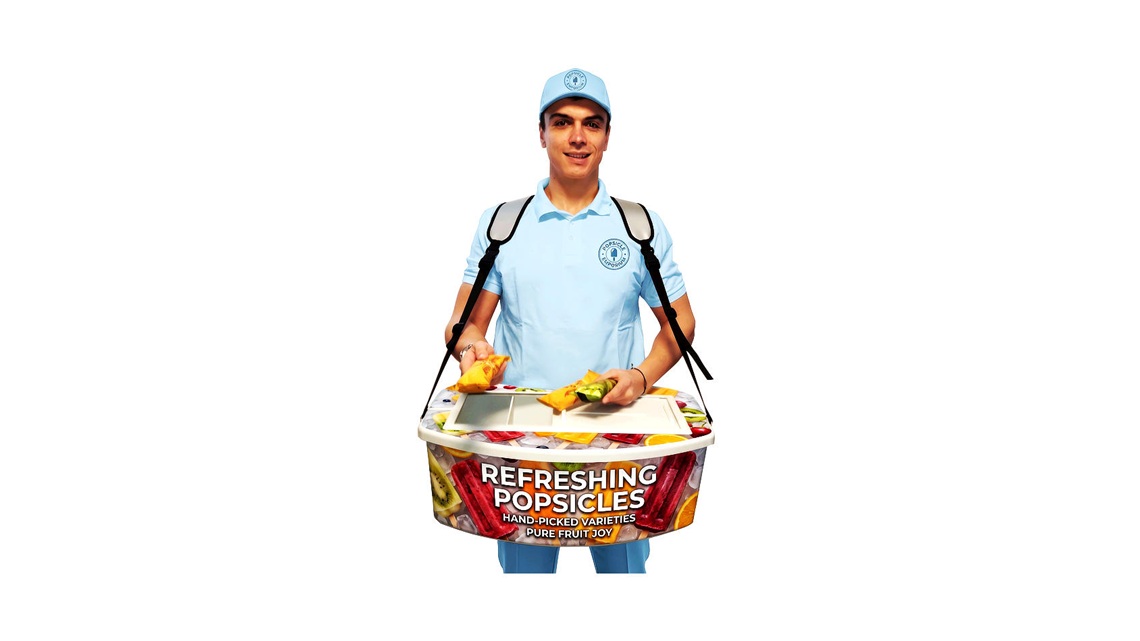
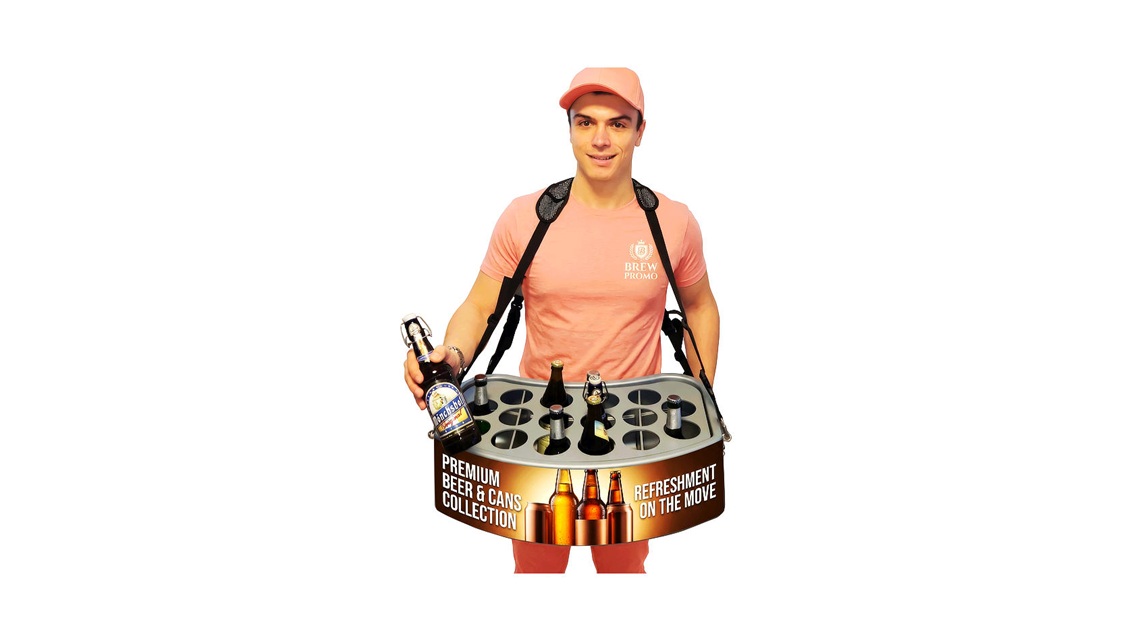
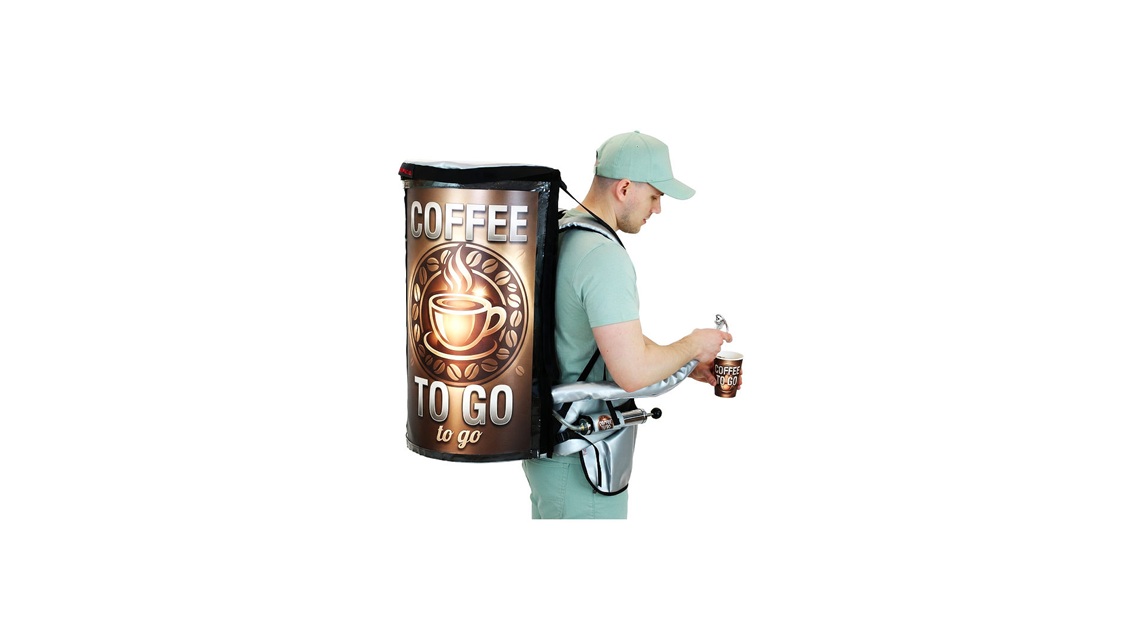
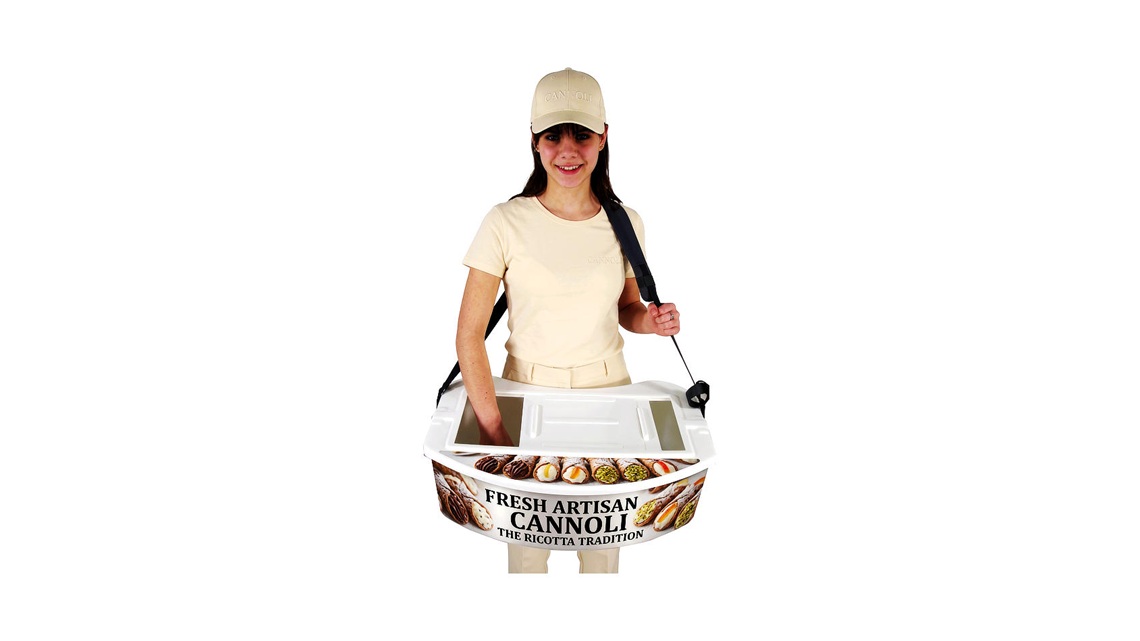
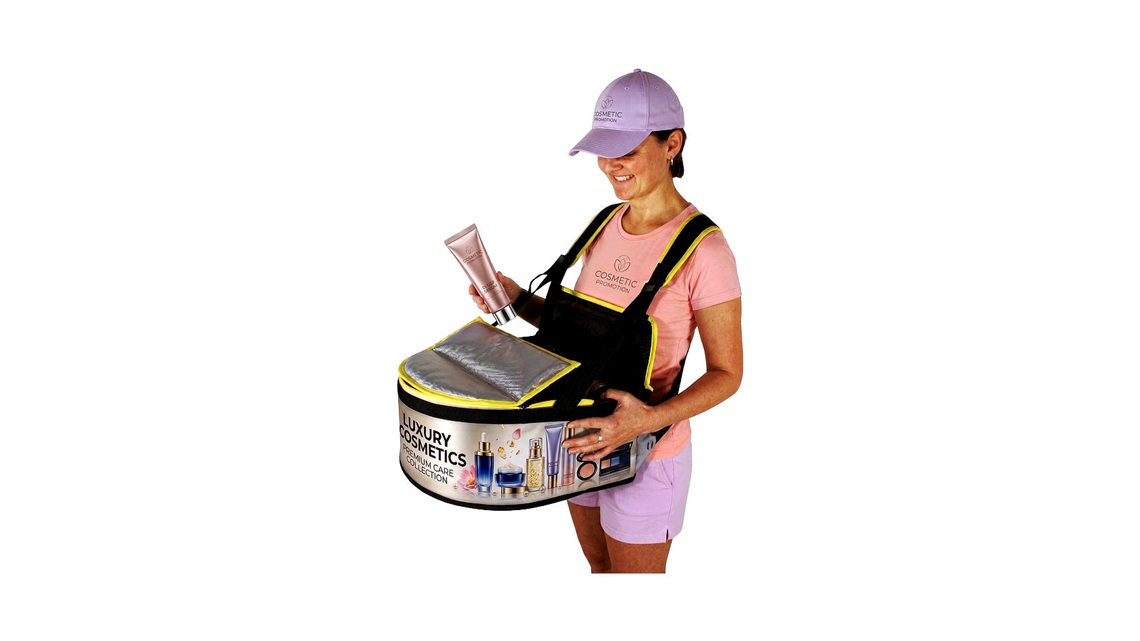
The page presents a narrow, front-carried textile tray for mobile sales, sampling and catering. It is intended for packaged drinks, snacks, ice cream products and smaller non-food items in locations where staff need to move beyond a fixed counter.
The reference configuration combines a curved body, adjustable carrying system, internal organization and removable advertising elements. The final setup should be selected for the actual product and route.
Which reference figures are stated for the tray?
The page lists an unfilled weight of approximately 2.2 kilograms and a net volume of about 25 litres. A separate technical section states dimensions of approximately 20 centimetres high, 39 centimetres wide and 39 centimetres deep.
These values describe the tray before goods and optional accessories are added. The quotation should confirm that they apply to the version being ordered.
Why is the narrow construction relevant in practice?
A compact body can be easier to use in aisles, seating areas and busy pedestrian routes than a wider service platform. The operator still needs enough turning space for the complete tray and its load.
The outside dimensions should be compared with the narrowest door, row, corridor or onboard passage. A product image cannot replace a measured route check.
What does the semicircular body shape contribute?
The curved front creates a continuous product and advertising area around the operator. The page also notes that the flexible material can accommodate some variation in the filled shape.
This does not mean that the tray should be packed beyond a safe or functional load. Overfilling can restrict access, change balance and place unnecessary stress on seams and carrying points.
Which material is named for the main body?
The technical information identifies truck tarpaulin as the tray material. This type of coated textile supports a shaped, wipeable construction suitable for repeated event use.
Material wording on the page should not be interpreted as a universal weather guarantee. Seams, closures, advertising pockets and accessories still require protection and routine inspection.
How should the listed silver standard colour be understood?
Silver is stated as the standard colour for the reference model. It provides a neutral base for exchangeable campaign graphics and can be combined with different front inserts.
The page indicates that special colours may be possible from a quantity of 50 pieces. Colour availability, minimum quantity and production schedule should be confirmed before the artwork process begins.
How does the 15-position organizer structure round packages?
The insert provides individual positions for suitable round packages. It can organize bottles, cans, cups or jars and reduce movement between equal containers during service.
The page does not provide one universal container diameter for this Vendor Tray. Buyers should submit the outside dimensions or a physical sample before compatibility is confirmed.
When is the room separator preferable to the circular insert?
A flexible separator is more suitable for mixed snacks, boxed products, merchandise or packages with different shapes. It allows the interior to be divided according to product group rather than container diameter.
The circular insert is more structured but less adaptable. The correct accessory depends on the real assortment and the order in which products are removed.
Can the tray carry drinks and snacks at the same time?
A mixed load is possible when both product groups remain stable and accessible. Drinks should not crush lightweight packs, and food packaging should not block the removal of bottles or cans.
A sample layout should be tested at full starting weight and again after several items have been sold. The balance may change as one section empties faster than another.
What should be checked when the tray is used for serving cups?
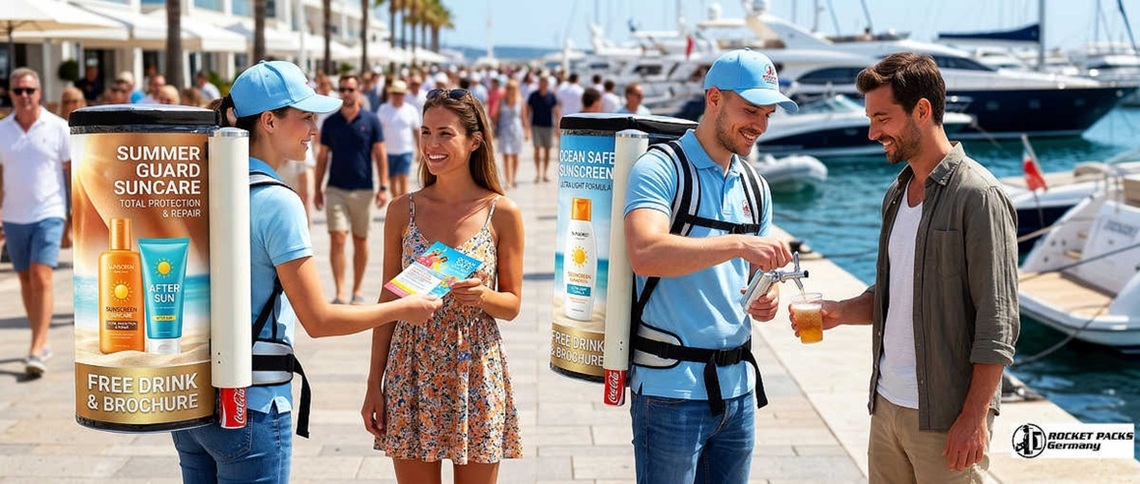
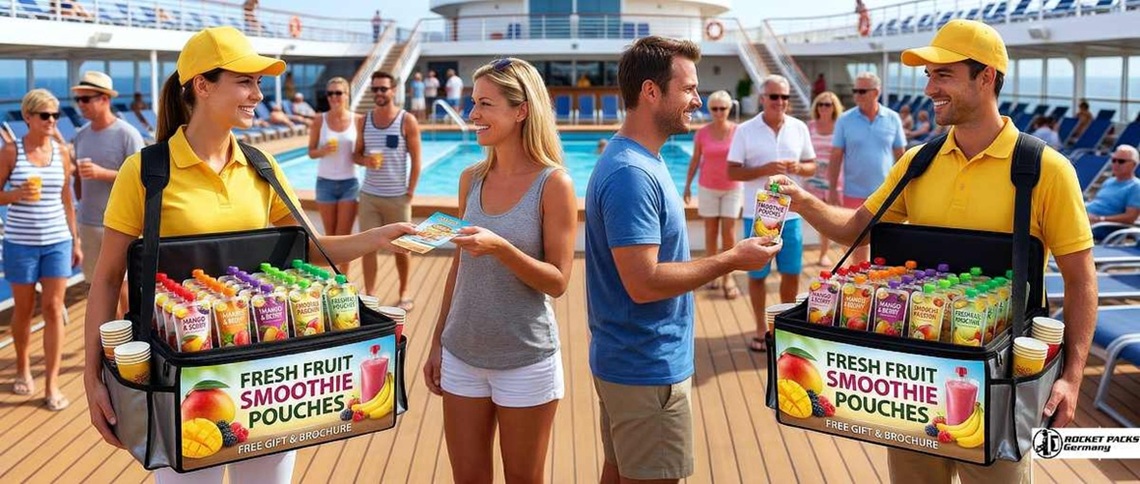
The page states that the beverage tray was developed for serving cups directly from the tray. The actual cup, lid and filled weight must nevertheless be tested before use.
Cups should remain upright while the operator walks, turns and stops. Open or loosely covered liquids require additional spill and burn-risk assessment.
How does the clip-strap system affect daily operation?
Clip straps allow the operator to put on and remove the tray without threading the complete harness each time. This can simplify staff changes and replenishment breaks.
All clips, adjustment points and attachment loops should be checked before loading. A fast-release feature is only useful when the connections are secure during movement.
How should the shoulder pads and rear straps be adjusted?
The padded straps should hold the tray level and close enough to the wearer for controlled access. Both sides are adjusted evenly while the employee wears the clothing planned for the event.
The final check should use the normal starting load. An empty fitting may change once bottles, food or payment equipment are added.
What advertising areas are stated on the product page?
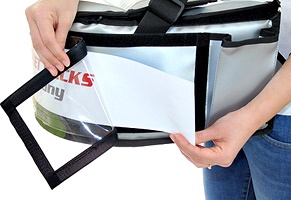
The page lists a front advertising surface of approximately 13 by 69 centimetres and a lid surface of approximately 12 by 31 centimetres. The curved front measurement may follow a wider graphic area than the straight body width.
Artwork should be prepared only after the manufacturer confirms the current insert and visible-area dimensions. Important content should remain clear of seams, folds and covered edges.
How should front and lid graphics be divided?
The front is visible while the operator approaches and should carry the main brand or product message. The lid can provide a secondary message, price information or a campaign detail when it is in the visible position.
Using the same dense design on both surfaces wastes the different viewing situations. Each panel should have one clear communication task.
What is the purpose of the optional promotion flag?
The page lists a promotion flag with telescopic stick as an optional accessory. It can make the mobile unit easier to identify above a crowd or mark a campaign team from a distance.
The flag adds height and catches wind. Indoor ceiling clearance, outdoor weather and venue permission should be checked before it is included in the operating setup.
How can the tray be used in bus, train, ship or aircraft catering?
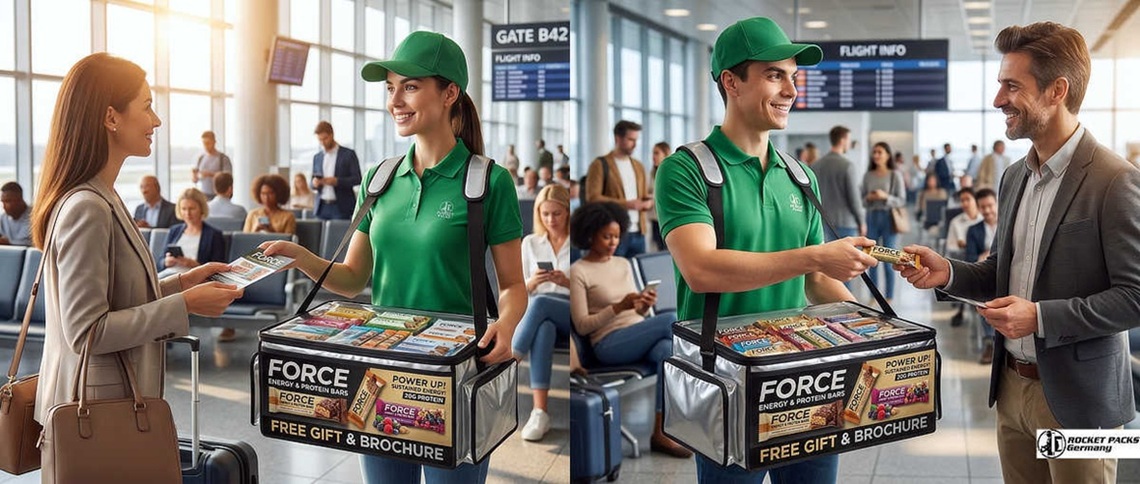
The page names onboard catering as a possible application because the narrow tray can bring a limited assortment directly to passengers. The route and product layout must be adapted to the specific vehicle or vessel.
Transport operators may impose separate rules for aisle clearance, turbulence, emergency access, food handling and payment. General product suitability does not replace operator approval.
Which operating controls matter most in stadiums and festivals?
These venues combine crowd movement, demand peaks, long routes and frequent replenishment. The tray should carry a focused assortment that can be recognized and handed over quickly.
The organiser must define permitted routes, refill points, staff rotation and any restrictions on food, alcohol or cash handling. The equipment is one part of the complete service plan.
How can mPOS equipment be added without disrupting service?
The page includes an example of mobile payment integration. A terminal should have a stable location where the responsible operator can see the confirmation and still reach the goods.
The mounting method must keep the device away from moisture and loose products. Battery life, network availability and transaction reconciliation remain separate operational requirements.
How should temperature-sensitive products be handled?
The page refers to thermo-insulating materials, but the tray does not actively cool or heat the contents. Products must enter at the correct starting temperature and be sold within a validated operating period.
Cold packs, load density, lid use, weather and opening frequency influence the result. No universal holding time should be assumed for every food or beverage.
What cleaning routine suits the textile and tarpaulin construction?
The insert, divider and loose accessories should be removed before the main body is cleaned. Seams, corners, advertising pockets, straps and the underside need separate attention.
Storage should begin only after the body, seams and padded parts no longer contain residual moisture. Trapped moisture can create odour and affect printed materials or padded carrying components.
Which points should be documented during a first-use trial?
A controlled test should record the configuration as well as the staff experience.
- Tray version, insert and separator arrangement
- Starting products and complete loaded weight
- Harness setting and operator clothing
- Route width, duration and replenishment distance
- Product access and changes in balance
- Payment-device position and connection quality
- Cleaning time and condition after return
- Required changes before wider deployment
This creates a practical basis for the final fleet and campaign setup.
Which details are required for a precise Vendor Tray quotation?
The enquiry should identify the product, operating environment and requested configuration.
- Package dimensions, shape and individual weight
- Number and type of products per mobile round
- Need for a 15-hole insert or room separator
- Temperature requirement and planned route duration
- Venue type and narrowest operating passage
- Front, lid and optional flag branding
- Special colour requirement and order quantity
- Delivery country, address and required date
These details allow the manufacturer to confirm the applicable technical version, accessories and production conditions.