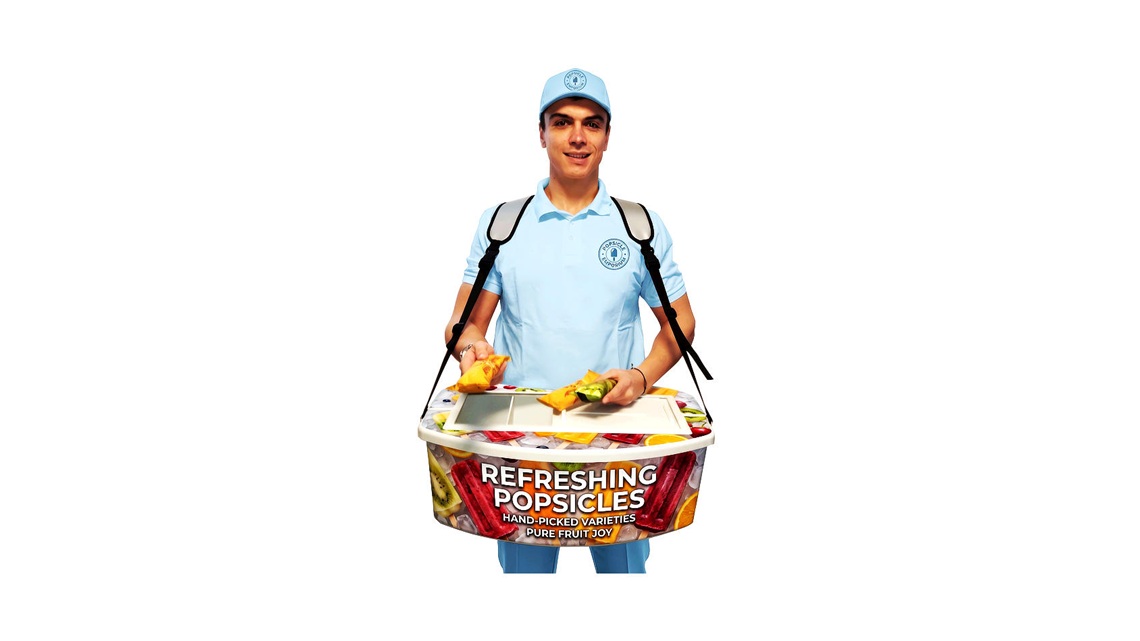
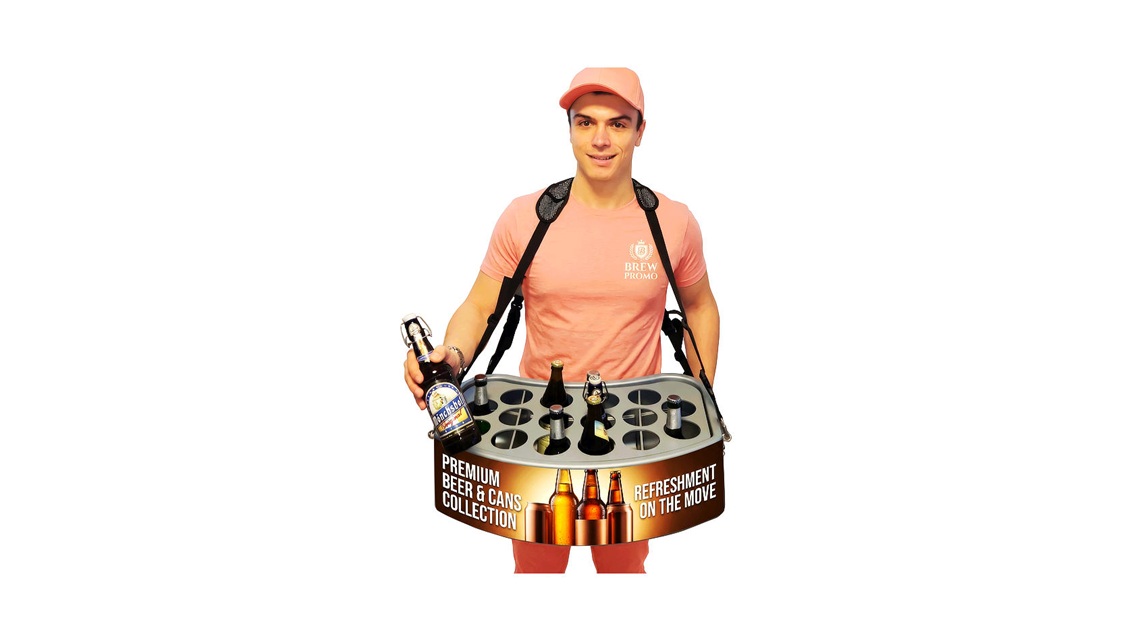
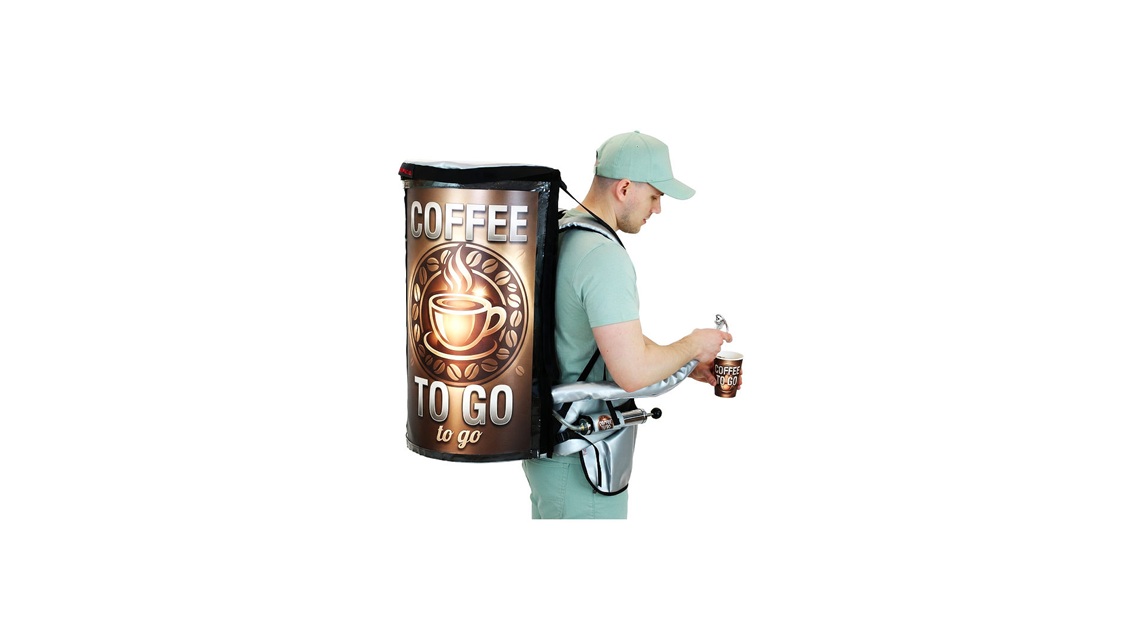
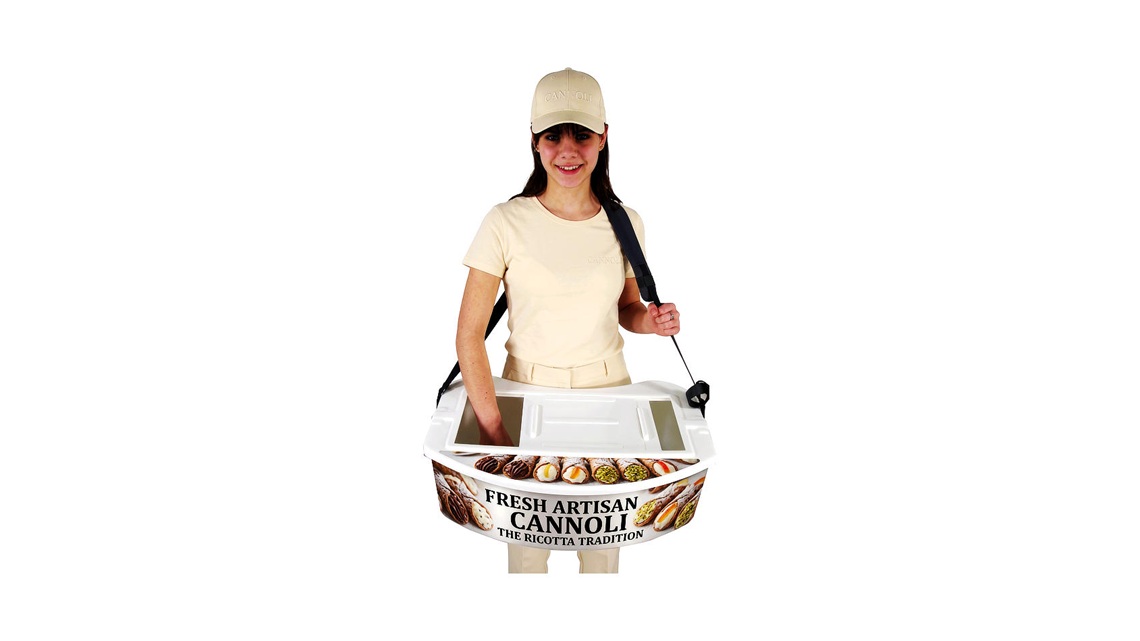
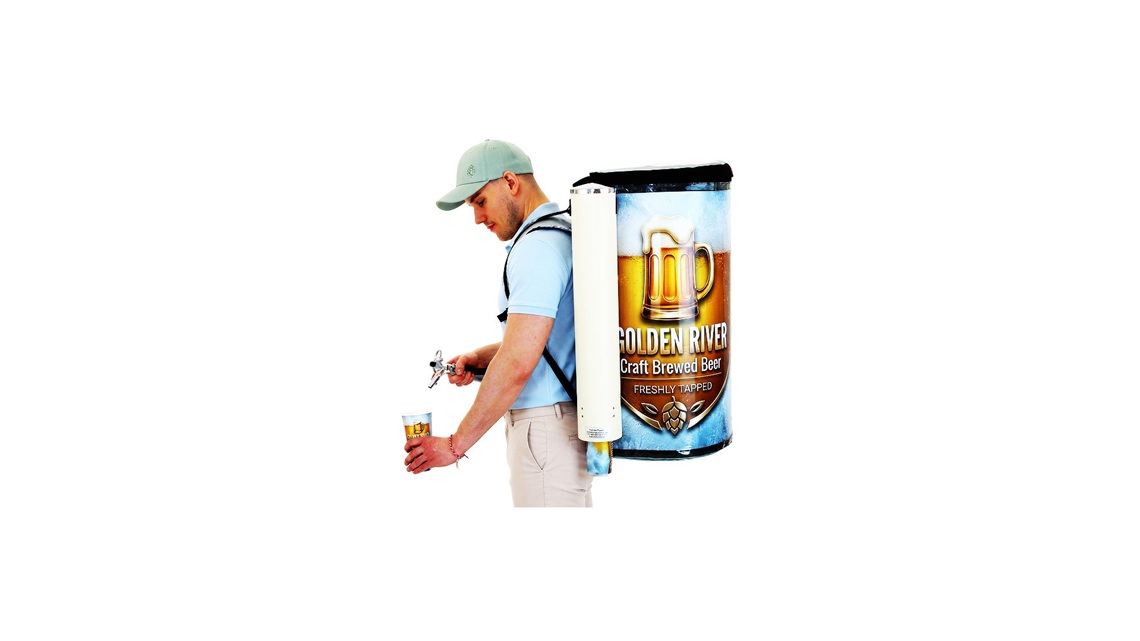
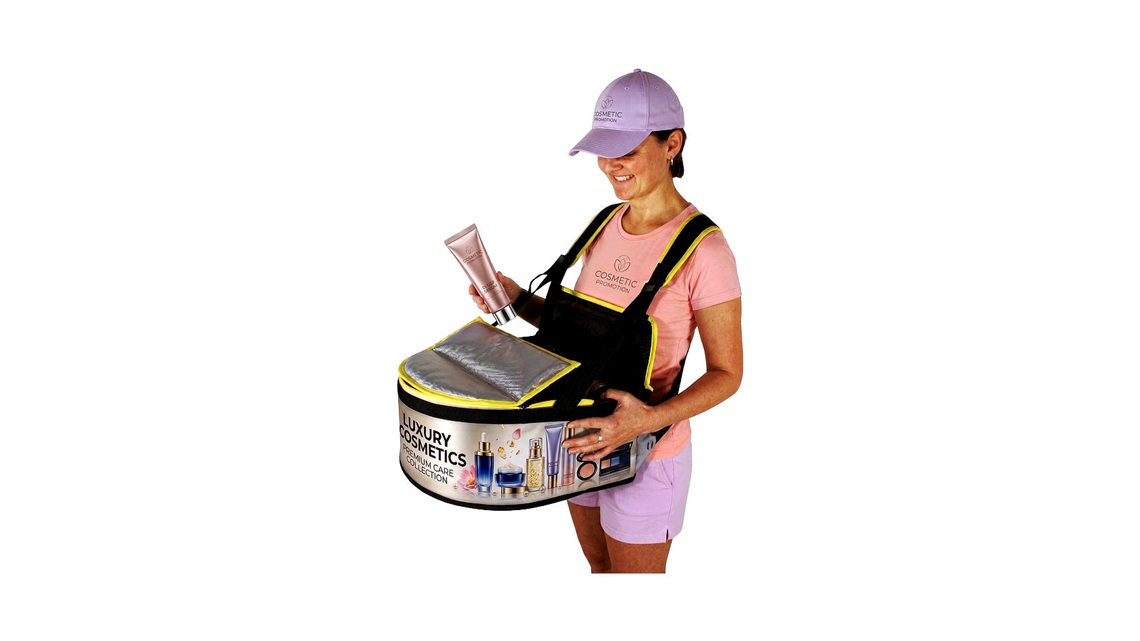
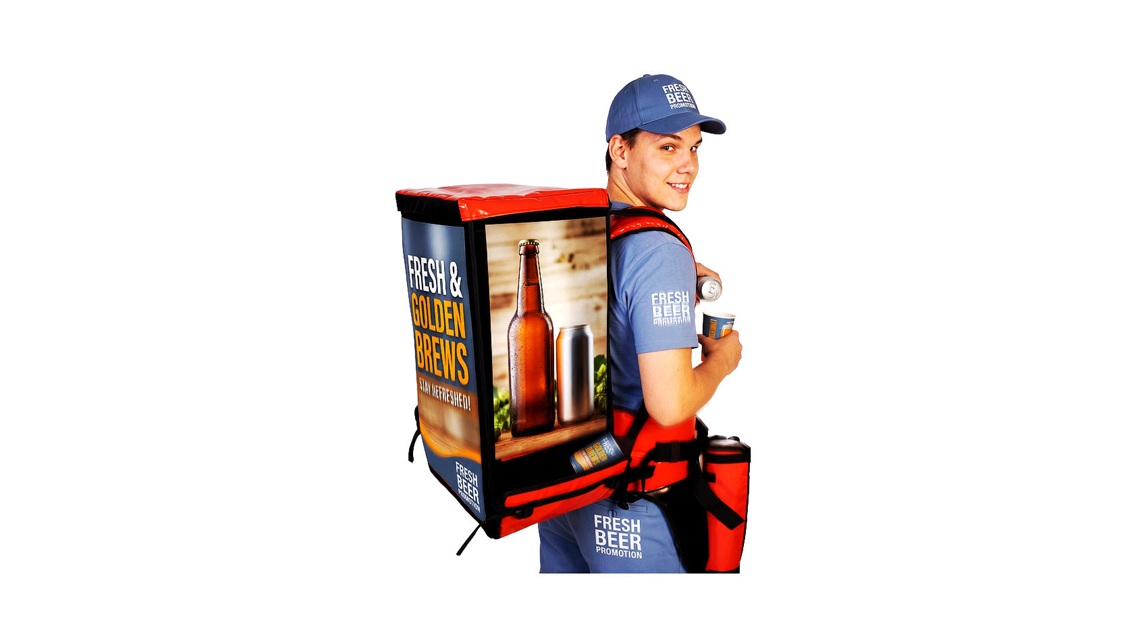
- Whimsical Flavors:
- Join us as our Ice Cream Tray Girl unveils a carousel of whimsical flavors, each scoop a burst of color and taste.
- From classic favorites to inventive creations, her tray is a treasure trove of frozen wonders.
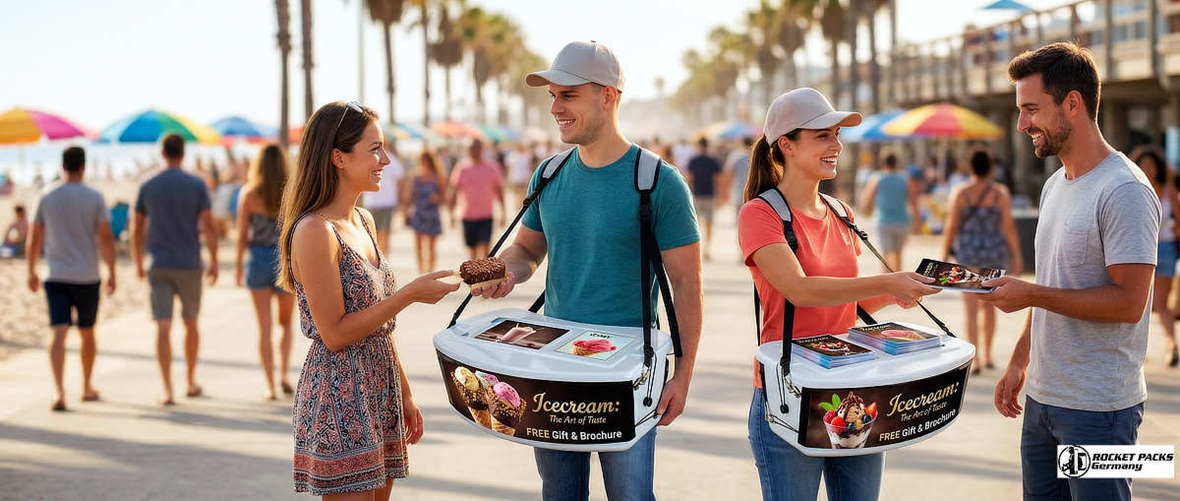
Why Choose Rocketpacks?
- Versatility Across Venues Whether you’re at a bustling festival, a crowded airport, or a lively amusement park, Rocketpacks offers the perfect solution to reach your audience.
- Our portable marketing systems are designed to be used in various settings, ensuring maximum visibility and engagement.
- Watch how ice cream vendor trays enable fast, mobile frozen dessert sales during major events in Toronto.
- Perfect for summer festivals, tourist hotspots, open-air concerts and promotional campaigns — durable, ergonomic and optimized for high-volume mobile vending.
- Ready to order? View technical details and pricing for our Ice Cream Vendor Trays
Activation Video FAQ for Mobile Ice Cream Campaigns
What should an ice cream vendor activation video prove?
The film should demonstrate a credible operating concept rather than only a colourful summer atmosphere. Viewers need to understand where the team works, what is handed over, how the tray is accessed and how the campaign fits the visitor journey.
A useful video connects product, location, staff behaviour and replenishment. It should not imply that visual excitement alone confirms sales performance or temperature compliance.
How should the campaign objective be defined before filming begins?
The team should decide whether the priority is product sampling, direct sales, flavour introduction, retailer support, visitor feedback or social-media content. Each objective requires different scenes and calls to action.
Trying to cover every purpose in one short clip usually creates an unclear message. A primary objective helps the editor select footage that supports a measurable outcome.
Which location details matter for a beach or boardwalk shoot?
The production plan should record sun exposure, pedestrian density, access to frozen stock, permitted selling zones and safe routes through the public area. Sand, wind and heat affect both the equipment and the filming schedule.
Wide establishing shots can show the environment, while closer operational scenes should be recorded where the seller can stop without blocking other visitors.
How can the video show mobility without relying on staged walking shots?
The operator should complete real tasks: leaving the stock point, approaching a service zone, opening the tray, handing over a product and returning for replenishment. These actions reveal more than repeated movement past the camera.
Filming from several distances makes it easier to judge route suitability, customer distance and the relationship between the tray and the surrounding crowd.
Why should the menu be simplified for a filmed activation?
A concise assortment is easier to explain visually and reduces interruptions while staff search for a specific flavour. The camera should be able to follow one clear selection and handover sequence.
Additional varieties can remain at the stock point or appear in separate content. A video does not need to display every available product to communicate the campaign concept.
How should local or regional flavour stories be presented?
Claims about locally inspired recipes, regional fruit or local dairy should be supported by the product supplier. The script should distinguish between a flavour theme and a verified sourcing statement.
A location name can create context, but it should not imply origin, certification or ingredient provenance unless those points are documented.
What is the difference between filming packaged ice cream and scoop service?
Packaged products allow a direct removal-and-handover sequence with limited food contact. Scoop service requires containers, utensils, portion control, hand hygiene and a safe method for protecting open ingredients.
The final edit should not combine the two methods in a way that makes the tray appear to provide equipment it does not contain. The operating setup shown must match the actual service format.
How should toppings and mix-ins be handled on camera?
Open toppings create extra hygiene, allergen and stability requirements. If they are part of the campaign, the video should show the controlled preparation area and not suggest that loose ingredients are carried without protection.
For a mobile tray sequence, sealed portions or pre-assembled products may provide a clearer and more repeatable demonstration.
How are allergen and dietary statements kept accurate in promotional footage?
Terms such as dairy-free, plant-based, nut-free or gluten-free should only appear when the responsible product company has approved the wording. Staff should use the same confirmed terminology in speech, captions and printed material.
A short video cannot replace the full ingredient and allergen information available on packaging or through the operator’s approved information system.
What should be considered when families and children appear in the activation?
The campaign should address accompanying adults and follow the venue’s rules for interactions with minors. Product suitability, allergen information and any age-related restrictions must be clear before a sample is handed over.
Children should not be placed at the centre of promotional footage without the required consent. A family-friendly setting is not automatic permission to publish identifiable images.
Which permissions may be needed before recording in a public venue?
The production team should confirm filming permission, commercial-use rights, brand approvals and any site-specific restrictions with the location operator. Public access does not necessarily mean unrestricted commercial filming.
Separate consent may be required for identifiable participants, staff from partner organisations and protected artwork or signage appearing prominently in the frame.
How can bystander privacy be protected during a busy event?
Camera angles can prioritise the trained staff and consenting participants while reducing recognisable background faces. Wider crowd scenes may be framed or edited so that incidental visitors are not the focus.
If a person becomes central to a customer interaction, the production team should treat that appearance differently from an anonymous background presence.
How much of the staff dialogue should be scripted?
The opening explanation, product name and required information should be standardised. The exact conversation can remain natural so that the interaction does not sound like a memorised advertisement.
Staff should avoid improvising unsupported health, quality or sourcing claims. A short approved message guide is more useful than a long theatrical script.
How should temperature control continue while multiple takes are recorded?
Filming often repeats the same action and can keep the lid open longer than a normal sale. Products should therefore be rotated back to controlled storage and replaced with correctly tempered stock when required.
The production schedule should separate camera preparation from product exposure. Decorative continuity must not take priority over the condition of food that may later be consumed.
Why should replenishment appear in the final video?
A brief replenishment scene explains that the wearable tray operates as part of a wider frozen-stock system. It prevents the impression that one load remains suitable for an unlimited period in hot weather.
The scene can also demonstrate flavour organisation, batch rotation and the practical distance between the mobile team and the controlled supply point.
How can trade-show footage differ from beach content?
At an exhibition, the emphasis may shift from leisure atmosphere to product demonstration, buyer conversation and controlled sample presentation. Background signage and stand location help viewers understand the professional setting.
The campaign should still avoid interrupting aisles or neighbouring exhibitors. Close-up footage can show the product interaction without presenting normal visitor congestion as a benefit.
How should equipment claims be separated from ice cream claims?
The tray manufacturer can describe confirmed construction, carrying and insulation features. Flavour, ingredients, nutritional properties and sourcing belong to the food producer.
The edit should not make the equipment appear responsible for taste, recipe quality or ingredient origin. Keeping those responsibilities separate improves technical accuracy.
Which claims should be removed unless supporting evidence exists?
Statements about guaranteed sales increases, perfect temperature, universal comfort, climate neutrality, premium ingredients or locally sourced content require appropriate evidence. Attractive footage does not establish those facts.
Where no substantiation is available, the film can describe the observed activity: mobile distribution, visible branding, direct contact or a defined sampling process.
How can short social-media clips be created from the main production?
The shot list should include vertical and horizontal compositions, clear product close-ups and several short complete actions. This allows editors to create platform-specific clips without cropping away the tray or the handover.
Every cut-down version must retain accurate captions and necessary disclosures. A shortened edit should not remove context in a way that turns an example into an unsupported promise.
What campaign metrics can be connected to the video project?
The production itself should not be treated as the outcome. The activation can separately record distribution volume, completed conversations, coupon use, retailer visits or voluntary feedback.
- Samples or products handed over per service period
- Contacts completed at each operating zone
- Redemptions linked to a defined code
- Frequently requested flavours or formats
- Interruptions caused by heat, stock or route conditions
- Engagement with the published video assets
Operational results and media results should be reported as different measures.
How is a reusable content library organised after the shoot?
Approved files should be labelled by location, format, product, participant permissions and expiry of usage rights. Raw footage, final edits, captions and still images need clear version names.
This prevents an old flavour, discontinued package or expired partnership message from being reused in a later campaign without review.
What should the final technical review check before publication?
The reviewer should compare the edit with the confirmed product configuration and campaign briefing.
- The tray shown matches the named model
- The service method reflects the actual equipment
- Cooling statements remain within confirmed limits
- Ingredient and sourcing claims have owner approval
- Branding and partner names use approved artwork
- Required participant and location permissions are recorded
- Captions do not create stronger claims than the footage supports
- Contact or campaign information is current
Publication should follow this review rather than relying only on visual quality.
Which details belong in a brief for a filmed ice cream activation?
The brief should connect the food product, equipment, location and intended media output.
- Campaign objective and target audience
- Product format, flavours and approved claims
- Service method and temperature-control plan
- Location, permissions and operating zones
- Staff roles and approved conversation points
- Participant consent and privacy process
- Required video formats, photographs and captions
- Measurement plan, publication channels and review owners
These details allow the activation and the video production to be planned as one controlled project rather than as unrelated marketing activities.